
AI Workflow Design
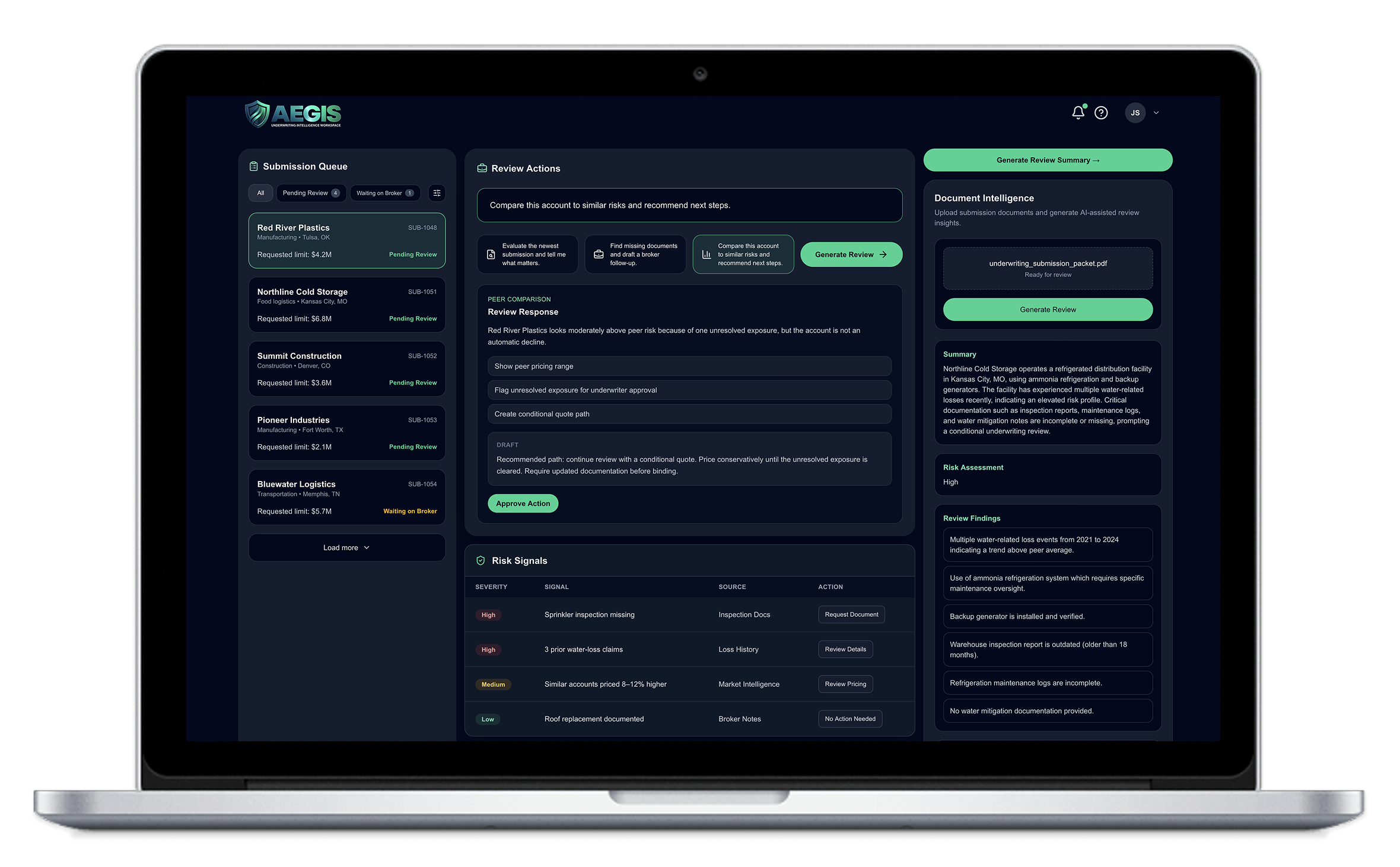
Aegis AI Workspace
Overview
- Product: AI-assisted underwriting workspace for reviewing complex commercial risk submissions
- Problem: Critical risk signals are often buried across dense documents, attachments, and fragmented review workflows
- Focus: Designed workflow patterns for document intelligence, surfaced risk signals, human review, and traceable AI support
Role & Scope
- Designed an AI-assisted underwriting workflow for reviewing document-heavy risk submissions
- Defined interaction patterns for signal surfacing, document review, and analyst decision support
- Structured human-in-the-loop review states to keep AI outputs visible, traceable, and actionable
- Explored how AI can support underwriting review without replacing human judgment
The Problem
- Underwriting teams review large volumes of submission material across PDFs, schedules, reports, and supporting documents
- Important risk indicators can be buried across disconnected documents and require manual cross-checking
- Reviewers need speed, but they also need evidence, context, and confidence before acting on AI-generated insights
- A simple chatbot pattern is not enough for operational review work that depends on traceability and structured decision-making
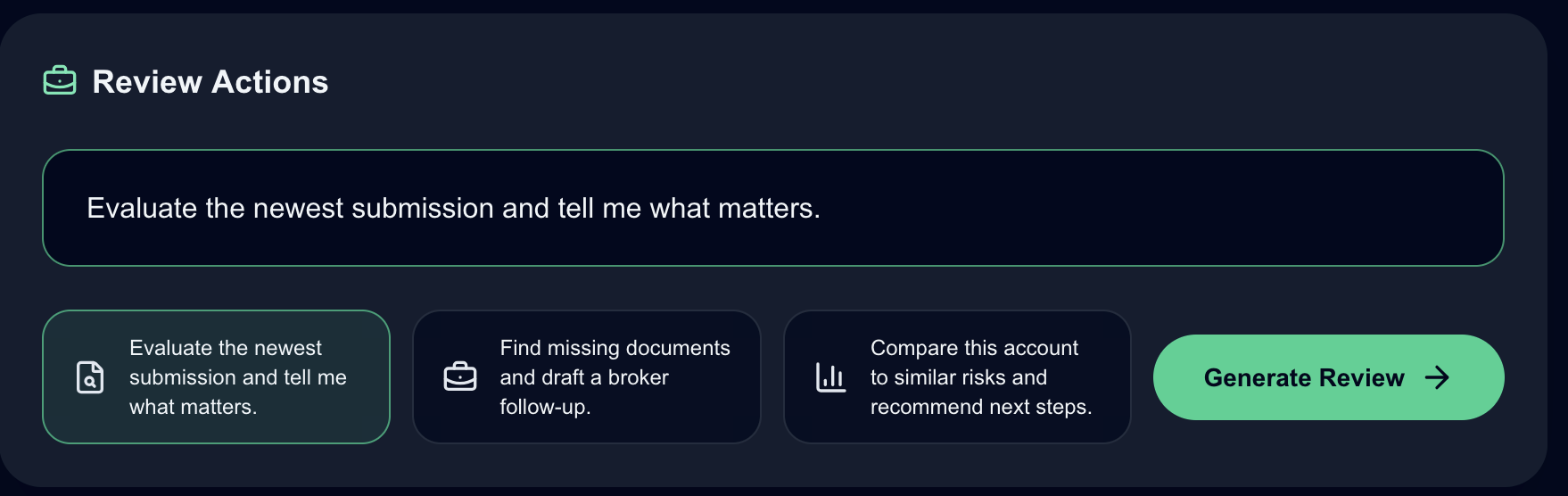
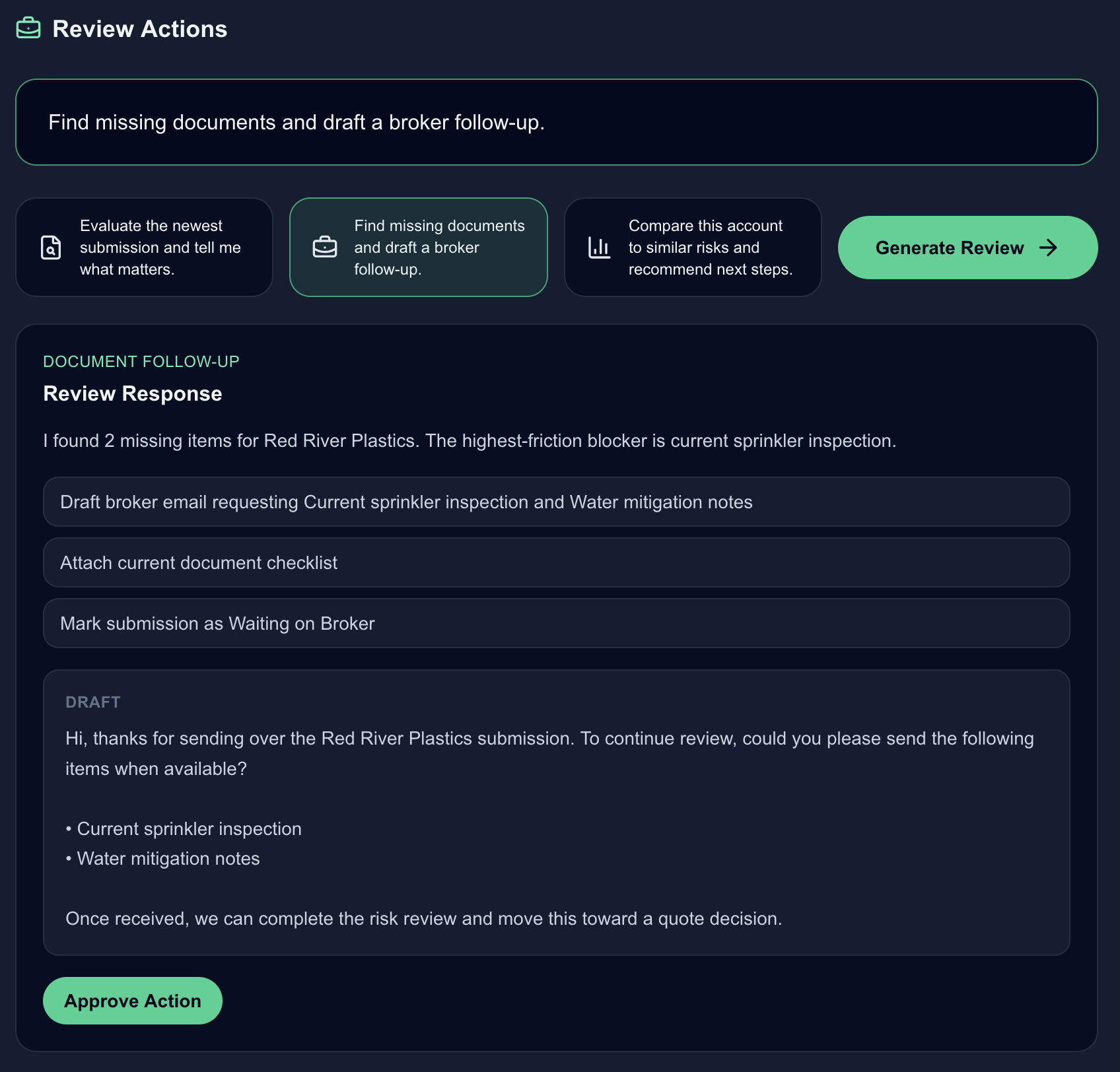
From Review Prompt to Operational Action
Aegis explores how AI can move beyond passive summaries and support structured underwriting actions, helping reviewers identify missing information, generate follow-up, and approve next steps with human oversight.
Key Decisions
- Workflow-first AI: Designed AI support around the underwriting task flow instead of treating it as a separate chat experience
- Evidence-linked signals: Connected surfaced risk indicators back to source documents so reviewers could validate where each signal came from
- Human review states: Used review status, confidence, and analyst actions to keep AI suggestions accountable and easy to inspect
- Multi-panel workspace: Structured documents, signals, account context, and review actions into one workspace to reduce context switching
- Operational decision support: Focused the AI layer on helping reviewers prioritize, compare, and validate information rather than automate the decision outright
Signals Surfaced
Turning document volume into reviewable insight
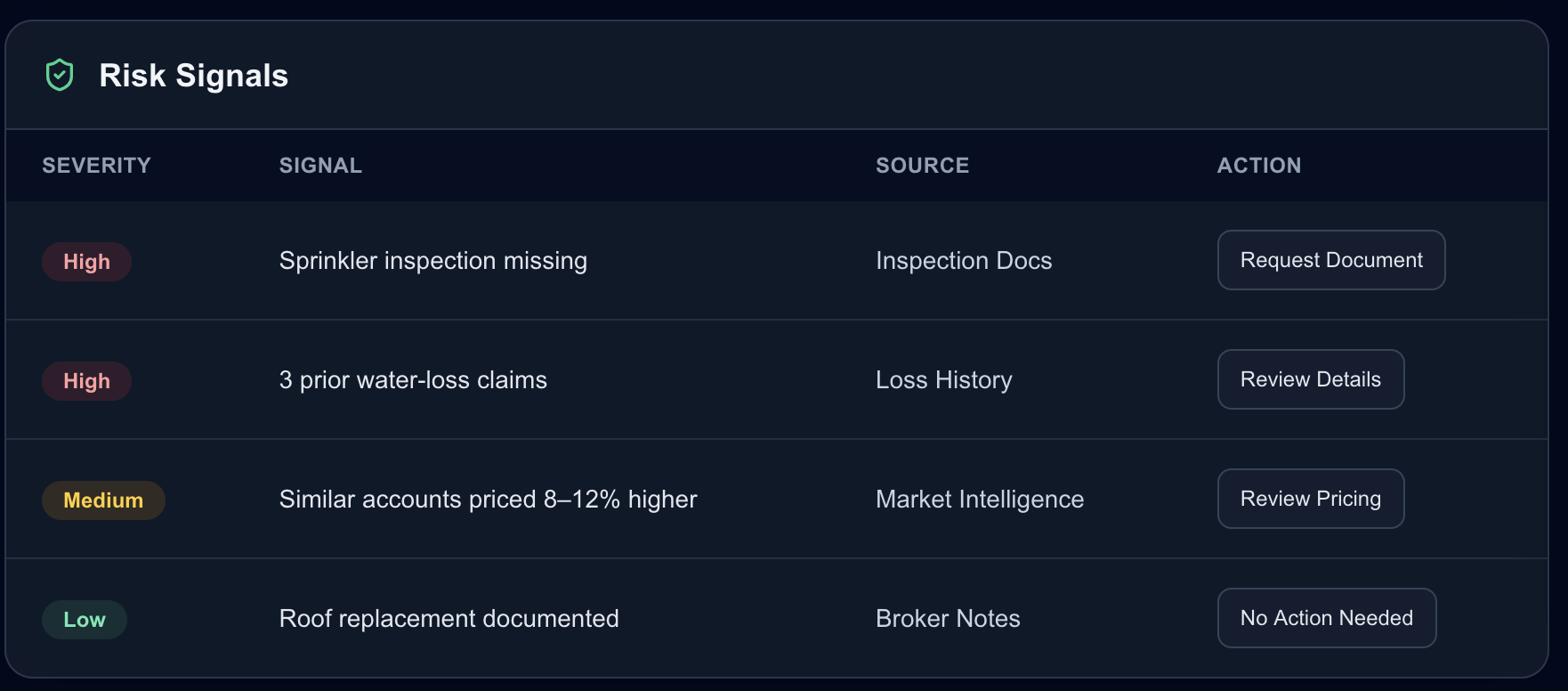
- Surfaced possible risk indicators from submission documents and account materials
- Organized signals by type, confidence, and review status
- Kept each signal tied to supporting evidence so reviewers could inspect the source before taking action
Evidence Panel
- Separated document review from signal review so each had a clear purpose
- Designed the evidence panel to show where AI-generated signals came from
- Supported human validation before risk signals were accepted, dismissed, or escalated
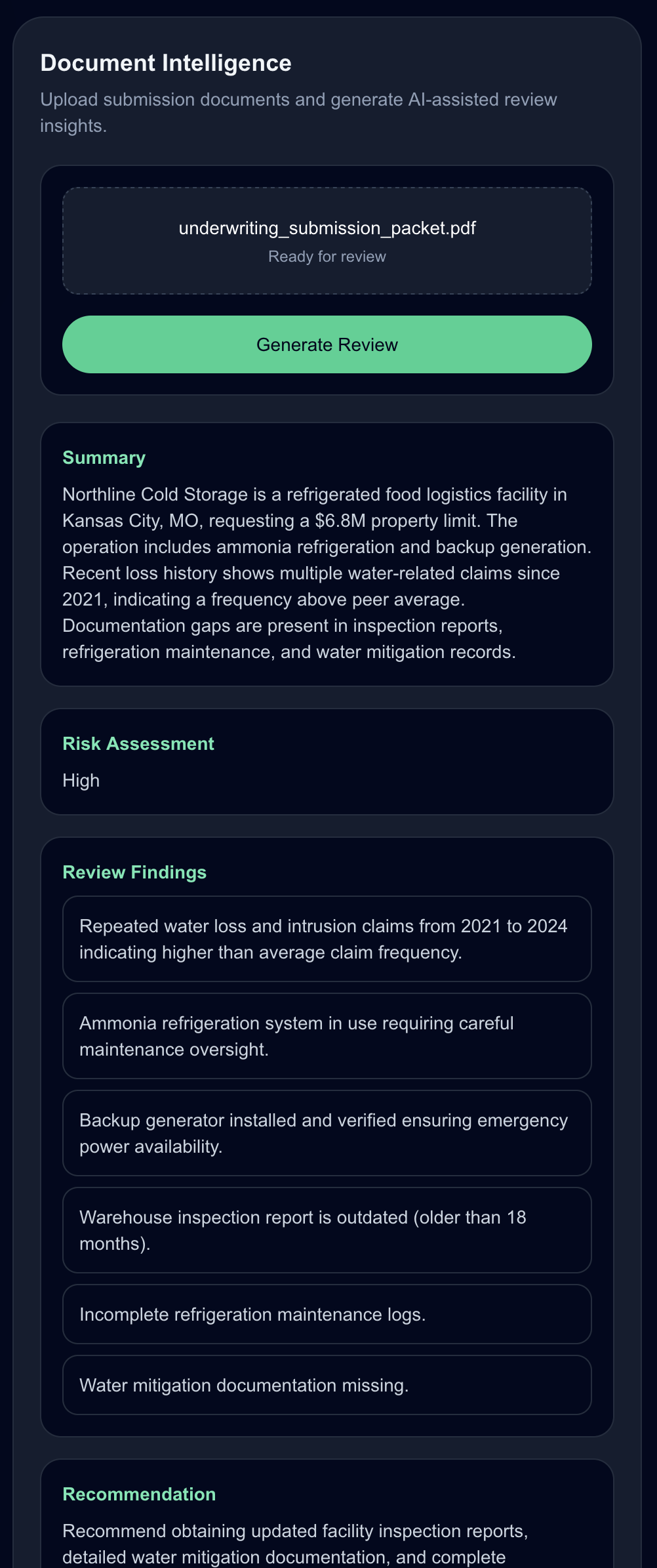
Traceable AI Output
- AI output was treated as a review aid, not a final decision
- Reviewers could inspect the source, compare evidence, and decide whether a signal was useful
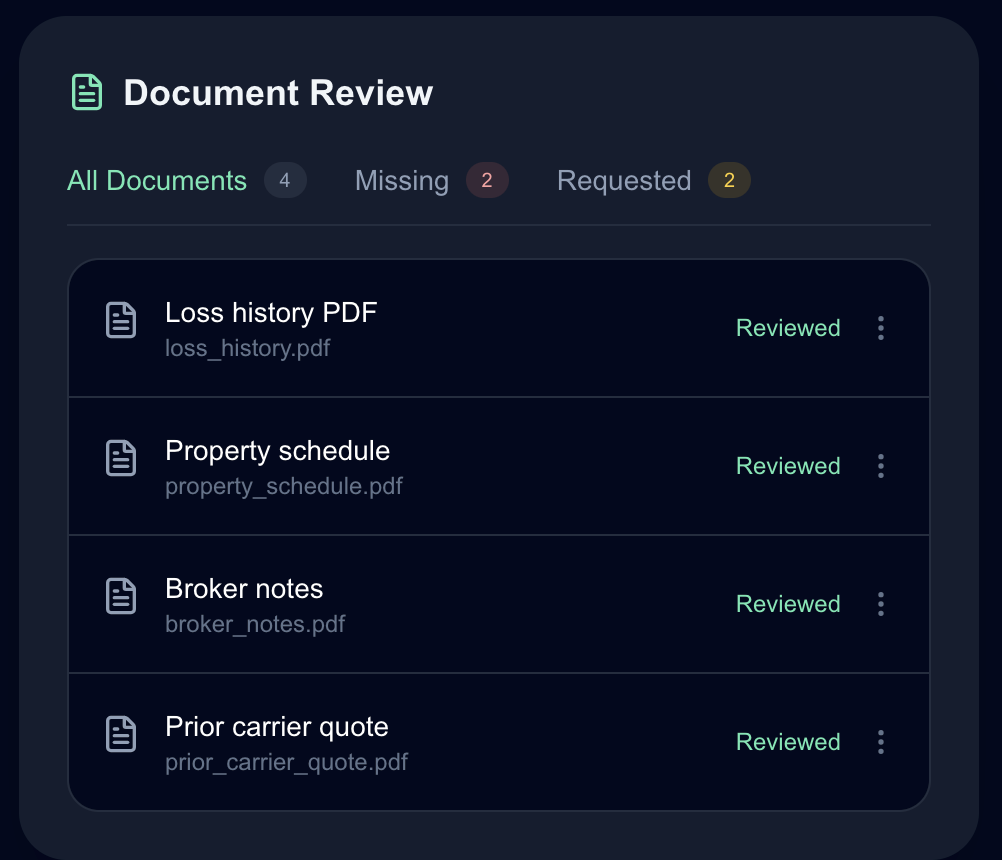
Documents as a Workspace, Not a File List
Documents were treated as active review material. The goal was to help reviewers understand what each document contained, what needed attention, and how it related to the broader account review.
Outcome
Aegis became a focused exploration of AI-assisted underwriting review. The case study demonstrates how document intelligence, surfaced risk signals, evidence review, and human oversight can work together inside a structured enterprise workflow.